- BGG rating
- 8.0
High Frontier Expansion
- 1–5 players
- 180 min
- Complexity 4.2/5
- 2010
2010
Rules assistance for High Frontier
Plain-language explanations of turns, card effects and disputed situations, with official source references and saved question history.
For 2 players
What would you like to know?
Answers come from the official rulebook, with the page to check.
High Frontier is a board game released in 2010 for 2–5 players, 180 minutes per game, and ages 12 and up. It was designed by Phil Eklund and its main mechanics are Variable Player Powers, Hand Management, and Auction / Bidding.
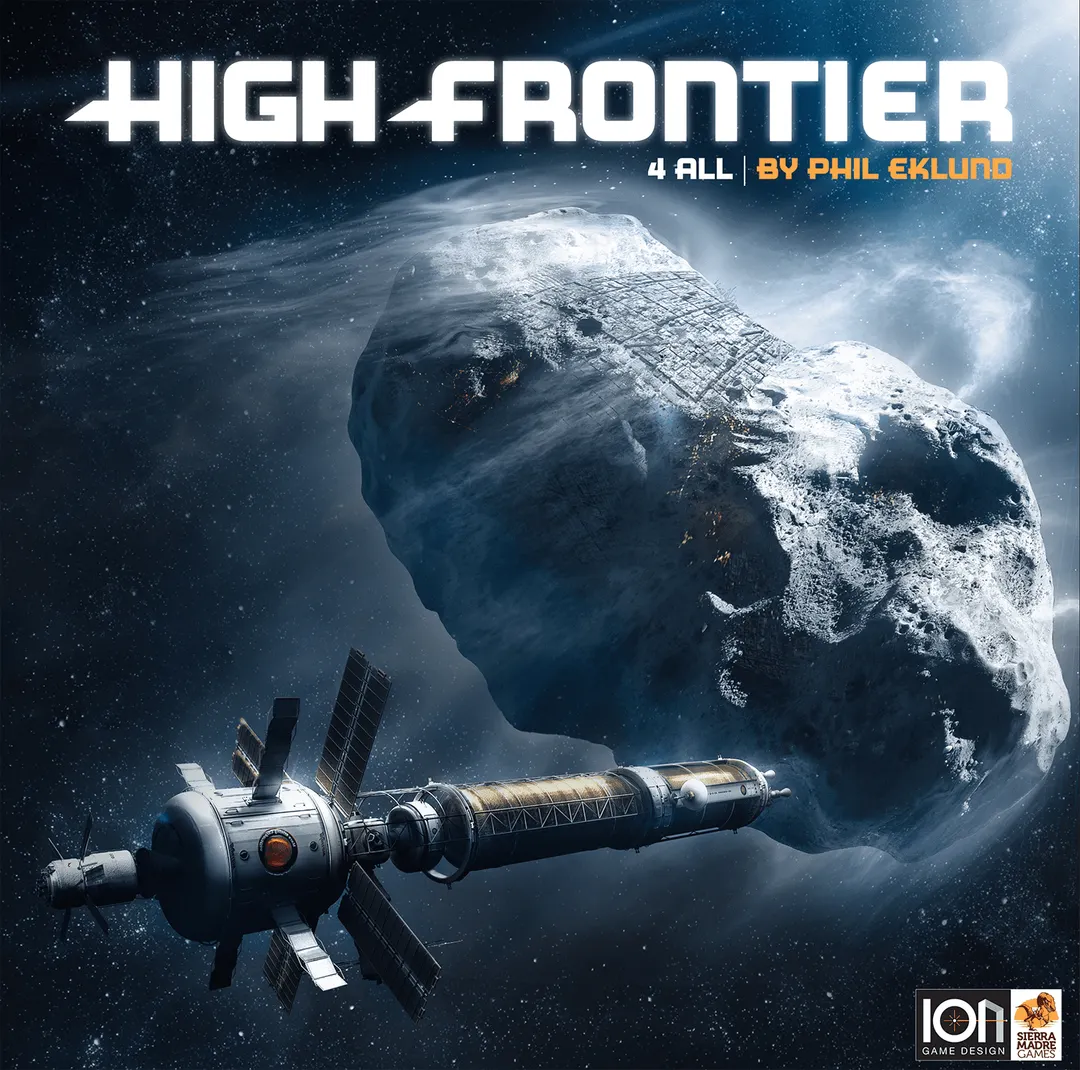
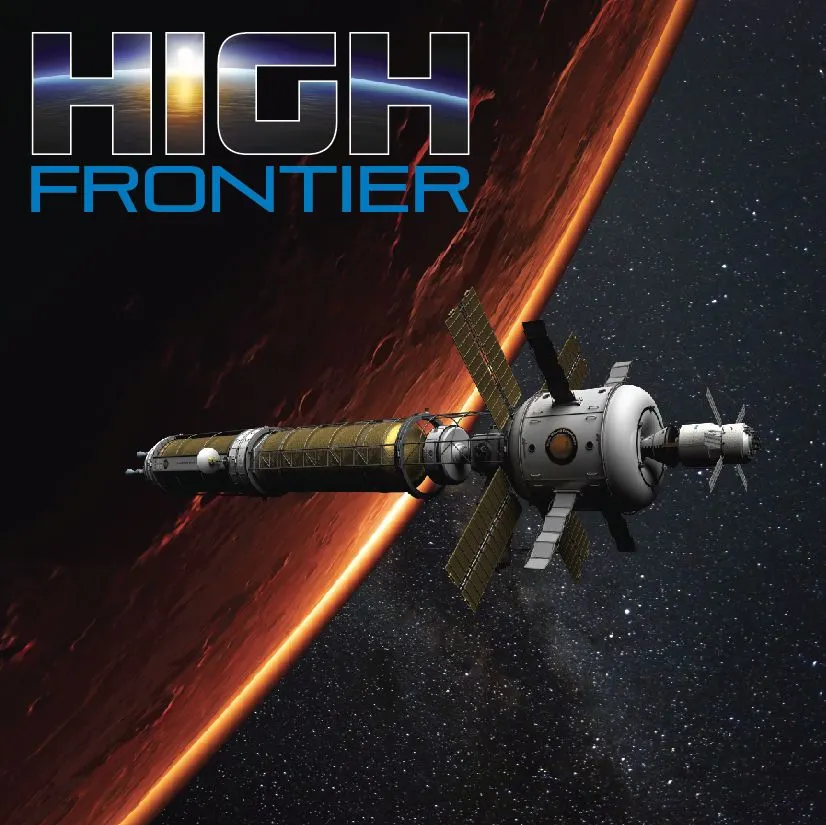


In the near future, nanofacturing techniques will allow incredible new materials to be built atom by atom. But they can only be built in the zero-gravity and high-vacuum conditions in space. Various private and government enterprises race to establish a buckytube mechanosynthesis factory on a suitable carbonaceous asteroid. To do so, they accumulate tanks of water in orbiting fuel depots, to be used as rocket propellant. Also needed are remote-controlled robonauts to do the grunt work. The key to success is water in LEO (low Earth orbit). At first, water will be expensively supported out of the deep gravity well of Earth. But for a third the fuel and energy, water can be supplied from Luna, the moons of Mars, or other nearby hydrated objects. Extracting resources at the work site is called In-Situ Resource Utilization (ISRU). Whoever develops ISRU technology able to glean water from space rather than Earth will gain the strategic high ground to make money through exoglobalization. In High Frontier, players are Earth governments which are racing to put together a functioning space program to extract resources and colonize the other planets, moons, and asteroids in our solar system. Players use water in LEO as currency to bid on space-related patents for thrusters, refineries, and robotics. Putting together a functional craft is not easy, as the heavier the craft becomes, the less maneuverable it is and the more fuel (also water in LEO) the craft will require, so players have to balance useful heavy parts with lighter, less functional parts. Victory points are awarded for successful mineral extractions, and for being the first to reach key technologies and exploration points in the solar system. Now in its second edition.
High Frontier supports 2–5 players according to the catalogue. This range comes from the publisher’s listed player count, so the game can be set up for any group size within it. Some setups, rules and scoring details may still vary by player count, so check your edition’s rulebook for the exact configuration.
The listed playing time for High Frontier is 180 minutes. This is the publisher’s estimate for a full game. The actual duration depends on the group, the player count and familiarity with the rules: first sessions usually run longer, while experienced groups often finish faster. Setup and teaching time are not included in this estimate.
The catalogue lists High Frontier for ages 12 and up. This is the publisher’s recommendation and reflects reading demands, rule complexity and small components rather than theme alone. Younger players can often join with help from an adult, so check the age guidance on your edition and consider your group’s experience with board games.
High Frontier has a complexity rating of 4.4 out of 5 from BoardGameGeek players, which makes it a heavy game. The rating reflects how much rules knowledge, planning and decision-making a typical game demands. Expect a longer first teach for heavier games, and use a preparation guide before game night.
High Frontier belongs to these categories: Economic, Science Fiction, and Industry / Manufacturing. Its main mechanics are Variable Player Powers, Hand Management, and Auction / Bidding. Categories describe the theme and setting of a game, while mechanics describe what players actually do on their turns. Each mechanic links to a catalogue hub with similar games, which helps when you want something comparable.
The credited designers of High Frontier are: Phil Eklund. These credits come from the published game data and name the people responsible for the game’s design, not its illustrators or publishers. Designer pages on MeepleRules collect other titles by the same designers, which helps when you enjoy a game and want to find similar ones.
The catalogue lists High Frontier as a base game. It can be played on its own with the components in the box and does not require any other title. Expansions, if any exist, add new content or rules on top of it and are listed separately in the catalogue with a link back to this base game.