
- BGG rank
- BGG #7,736
- BGG rating
- 7.1
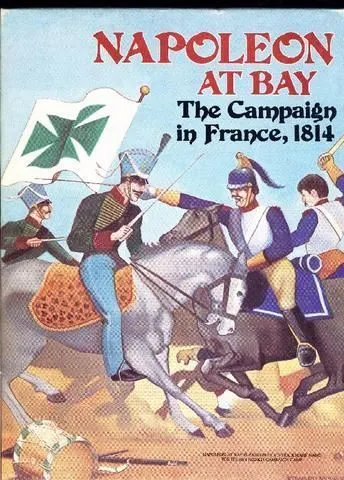
Napoleon at Bay: The Campaign in France, 1814
- 2 players
- 180 min
- Complexity 3.5/5
- 1978
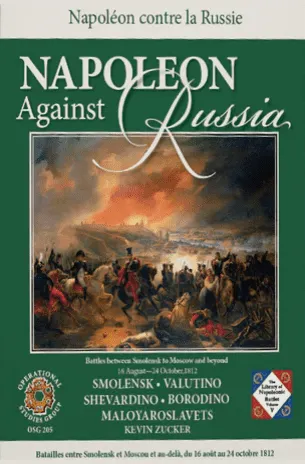
2015
Rules assistance for Napoleon Against Russia
Plain-language explanations of turns, card effects and disputed situations, with official source references and saved question history.
For 2 players
What would you like to know?
Answers come from the official rulebook, with the page to check.
Napoleon Against Russia is a board game released in 2015 for 2–4 players, 180 minutes per game, and ages 12 and up. It was designed by Kevin Zucker and its main mechanics are Hexagon Grid and Simulation.
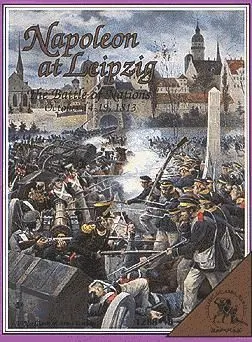

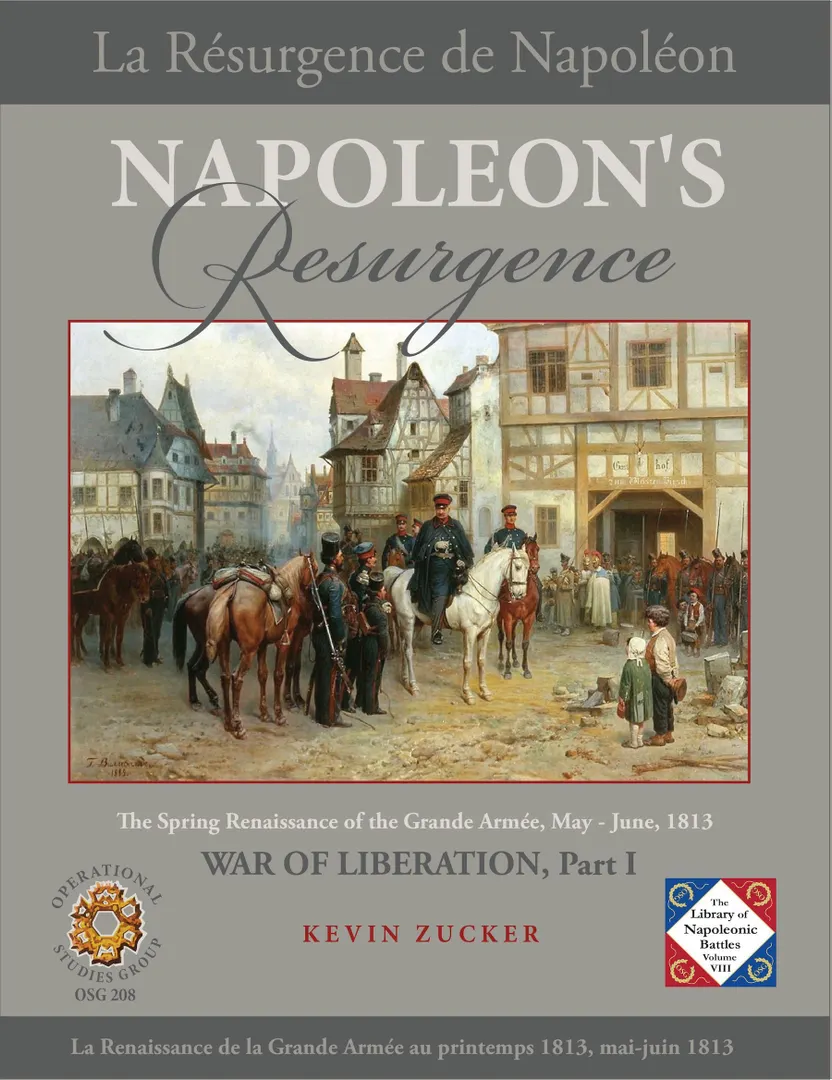
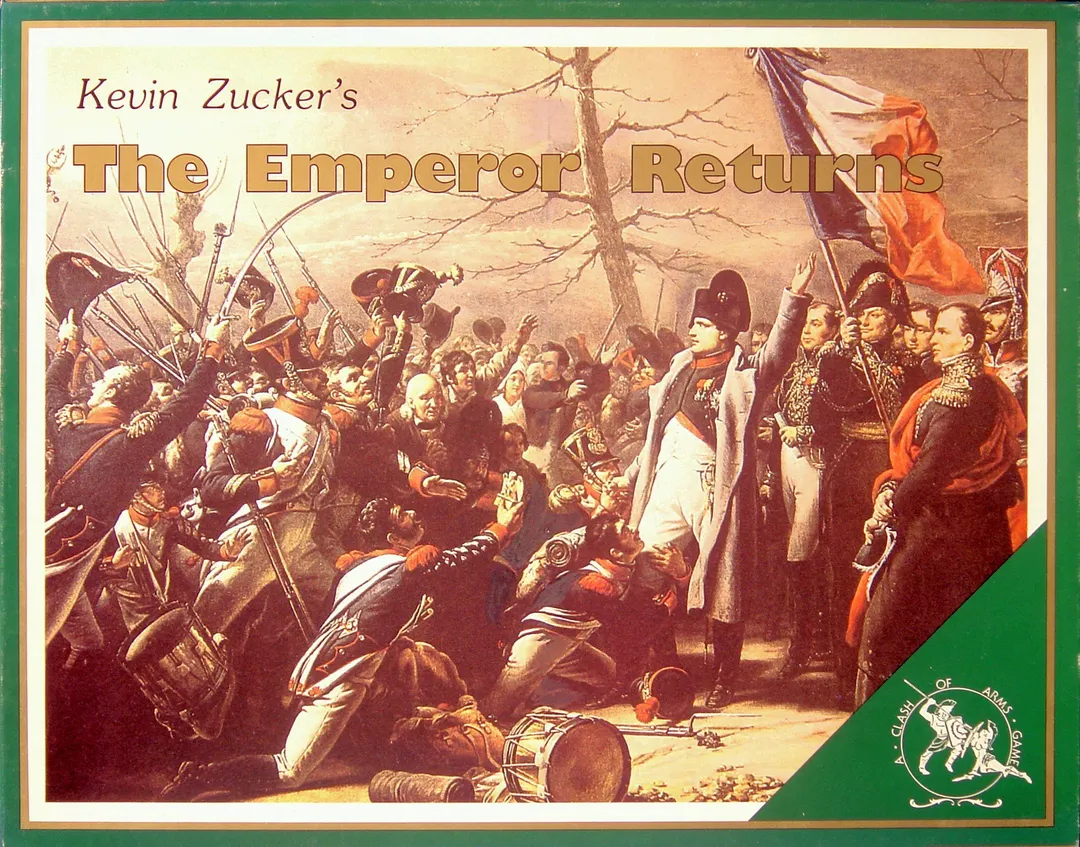
Napoleon Against Russia - From Smolensk to Moscow and beyond August 16-October 24, 1812 contains five battles from the critical phase of the Campaign, when the Russian Army finally gave Napoleon the decisive battles he so greatly desired. His first maneuver starts out well—with the French poised to slip into Smolensk behind the Russians. However, the opportunity to bring an end to the campaign will remain unfulfilled. After that, Moscow became the default destination of the Grande Armée. As Napoleon stated, “The wine has been poured and must now be drunk." Napoleon against Russia is one of the games from OSG's THE LIBRARY OF NAPOLEONIC BATTLES series. Details on the series are below, as all the games share a common rules set and game system. BATTLES SIMULATED: Smolensk, A Battle Postponed, 16-17 August When he recognized that the enemy had withdrawn into the city, the Emperor’s plan was stymied. He either had to seize Smolensk on the 16th, without waiting for the arrival of the entire army, or cross the Dneiper River east of Smolensk. Instead he waited for the Russians to make a mistake, and gave them time to pull out along the Moscow road. Valutino, Rearguard Action, 18 August When the Russians did give him an opportunity to catch the First Army disunited after a confused night march, Napoleon had already returned to Smolensk, expecting nothing more than a rearguard action. Hence he was not on the scene to coordinate the actions of his Marshals, who, left to themselves, were unable to crystallize a victory out of the opportunity. Shevardino, Fight for the Redoubt, 5-6 September The preliminary battle opened with the arrival of the French cavalry who immediate attacked Konovnytsyn. On the 6th, more French forces arrived including the IV Corps and the Polish Corps. The French captured the Shevardino redoubt at a cost of 4,000–5,000 French and 6,000 Russian casualties. Borodino, The Russian Army is Saved, 7-8 September In the climactic battle, Napoleon has been criticized for making a simple frontal assault. With our large map the French player will have plenty of maneuver room to try and outflank the Russian army to the south, or even to the north. He will also have the option of attacking the north flank as Kutusov expected. Maloyaroslavets, The Retreat Goes Awry, 23-24 October Trying to secure a bridge over the Luzha River, the Italians of Eugene's IV Corps lost about 5,000 and the Russians about 6,000 men as the town changed hands eight times. Except for Davout, all the French marshals advocated a return to the main highway to Smolensk, through the depleted zone, a detour that doomed the Army. DESCRIPTION Series: The Library of Napoleonic Battles (OSG) - formerly known as the Napoleon's Last Battles (NLB) Series: 480 meters per hex, 1 hour per turn, 400-800 men per strength point. Each Approach to Battle game lasts about 22 turns. The Full campaign links the individual battles. (Text from the OSG pages)
Napoleon Against Russia supports 2–4 players according to the catalogue. This range comes from the publisher’s listed player count, so the game can be set up for any group size within it. Some setups, rules and scoring details may still vary by player count, so check your edition’s rulebook for the exact configuration.
The listed playing time for Napoleon Against Russia is 180 minutes. This is the publisher’s estimate for a full game. The actual duration depends on the group, the player count and familiarity with the rules: first sessions usually run longer, while experienced groups often finish faster. Setup and teaching time are not included in this estimate.
The catalogue lists Napoleon Against Russia for ages 12 and up. This is the publisher’s recommendation and reflects reading demands, rule complexity and small components rather than theme alone. Younger players can often join with help from an adult, so check the age guidance on your edition and consider your group’s experience with board games.
Napoleon Against Russia has a complexity rating of 3.1 out of 5 from BoardGameGeek players, which makes it a medium-weight game. The rating reflects how much rules knowledge, planning and decision-making a typical game demands. Expect a longer first teach for heavier games, and use a preparation guide before game night.
Napoleon Against Russia belongs to these categories: Wargame and Napoleonic. Its main mechanics are Hexagon Grid and Simulation. Categories describe the theme and setting of a game, while mechanics describe what players actually do on their turns. Each mechanic links to a catalogue hub with similar games, which helps when you want something comparable.
The credited designers of Napoleon Against Russia are: Kevin Zucker. These credits come from the published game data and name the people responsible for the game’s design, not its illustrators or publishers. Designer pages on MeepleRules collect other titles by the same designers, which helps when you enjoy a game and want to find similar ones.
The catalogue lists Napoleon Against Russia as a base game. It can be played on its own with the components in the box and does not require any other title. Expansions, if any exist, add new content or rules on top of it and are listed separately in the catalogue with a link back to this base game.