
- BGG rank
- BGG #8,645
- BGG rating
- 8.0
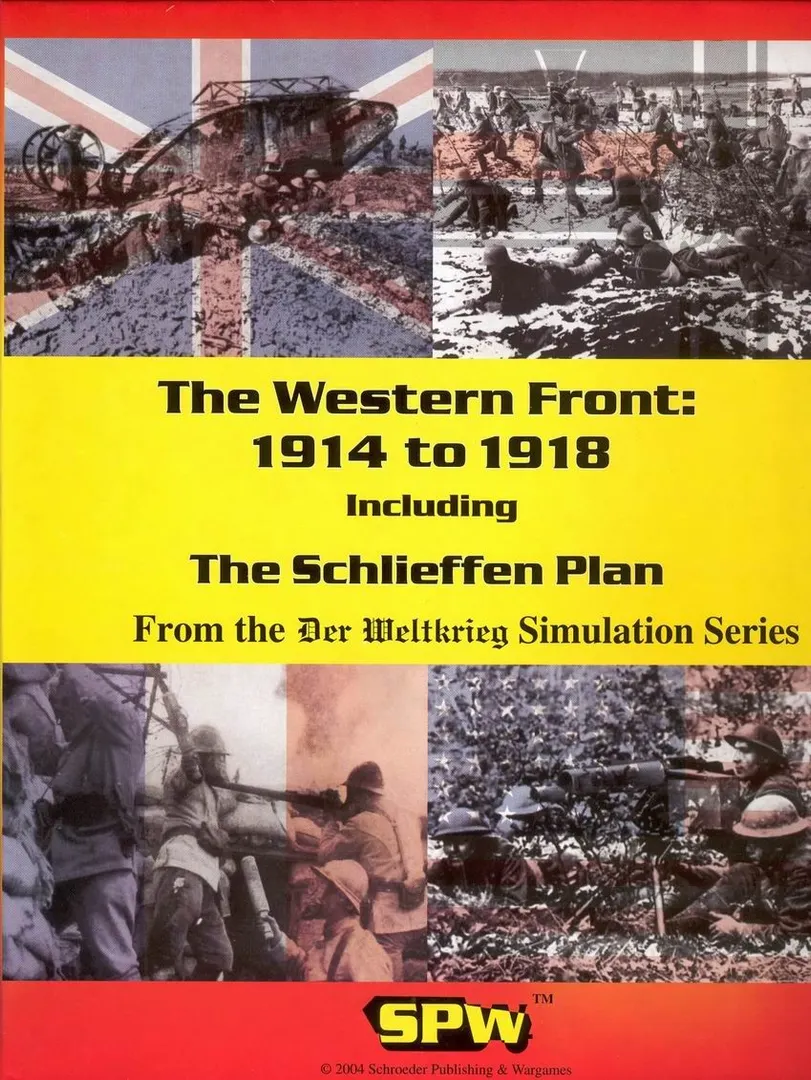
The Western Front: 1914 to 1918
- 2 players
- 360 min
- Complexity 3.4/5
- 2004
2009
Rules assistance for Osmanli Harbi: The Ottoman Fronts – 1914 to 1918
Plain-language explanations of turns, card effects and disputed situations, with official source references and saved question history.
For 2 players
What would you like to know?
Answers come from the official rulebook, with the page to check.
Osmanli Harbi: The Ottoman Fronts – 1914 to 1918 is a board game released in 2009 for 2 players, 360 minutes per game, and ages 12 and up. It was designed by David Schroeder and its main mechanics are Dice Rolling, Hexagon Grid, and Simulation.
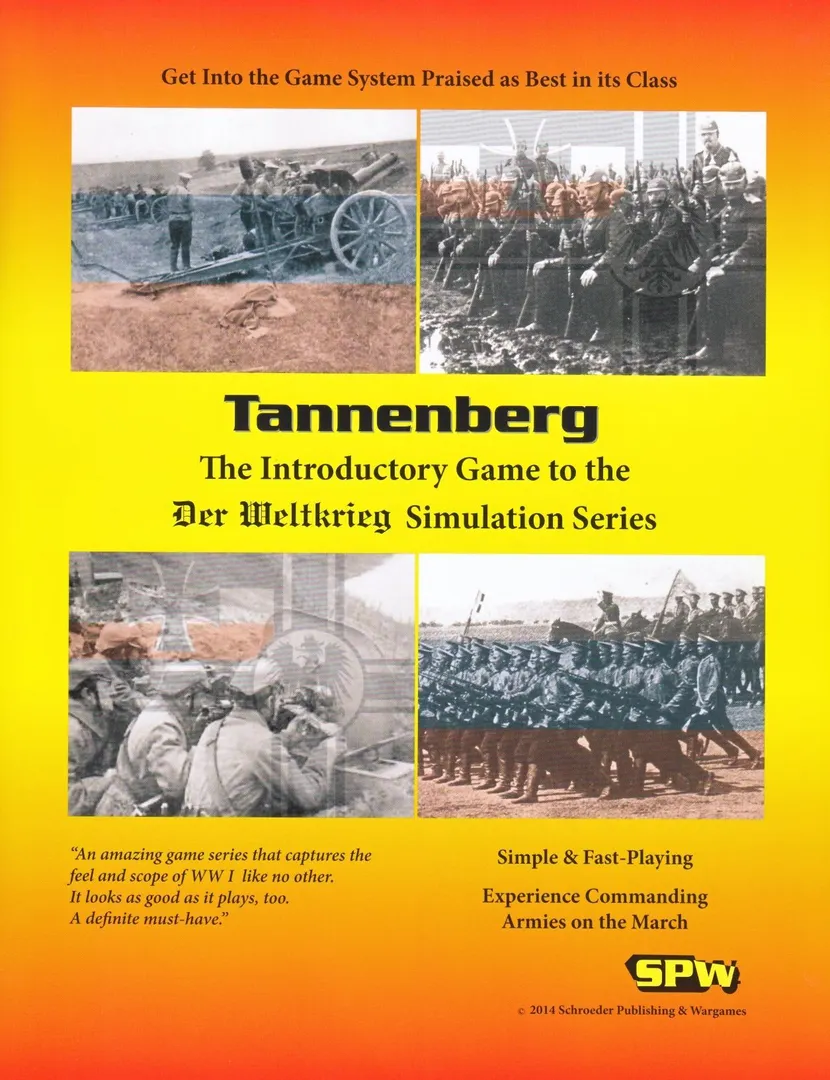
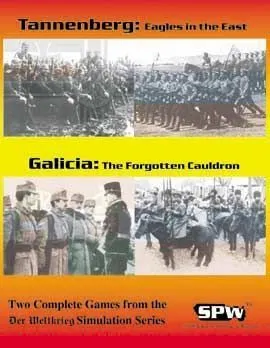
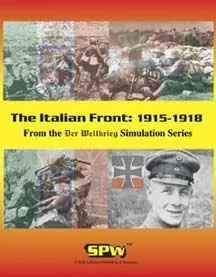


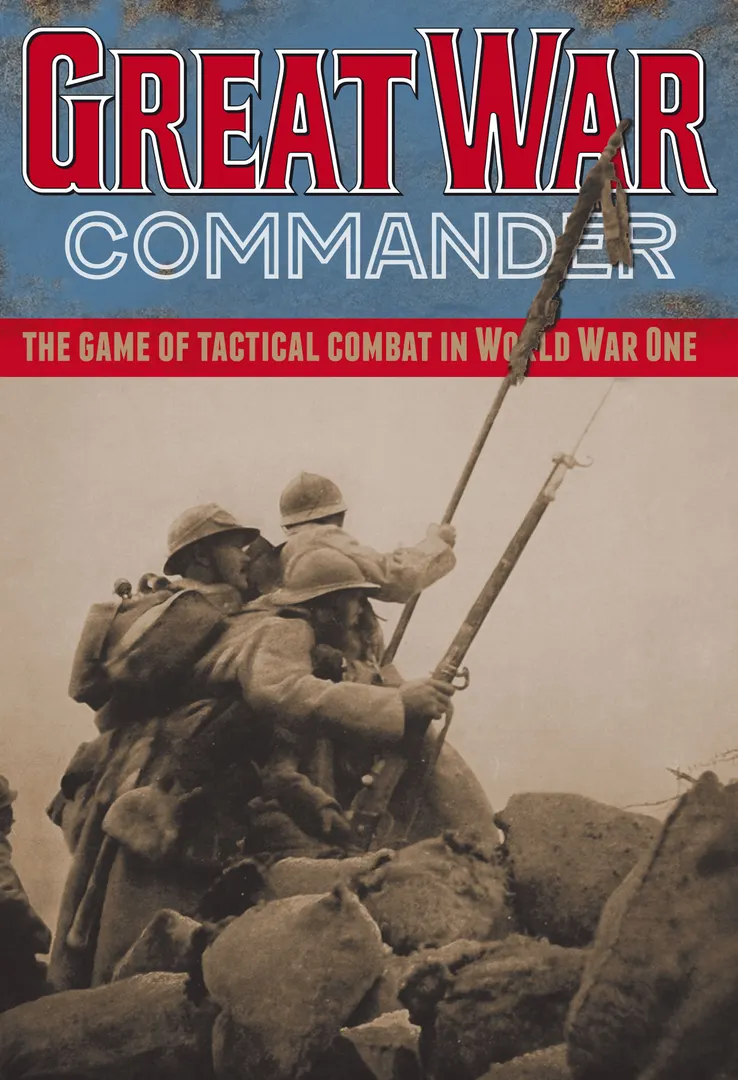

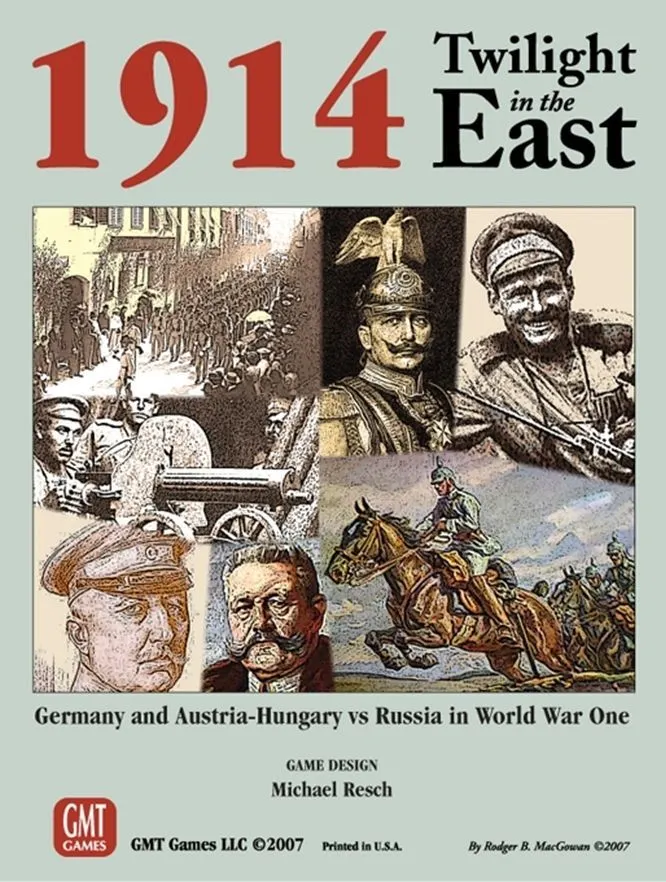

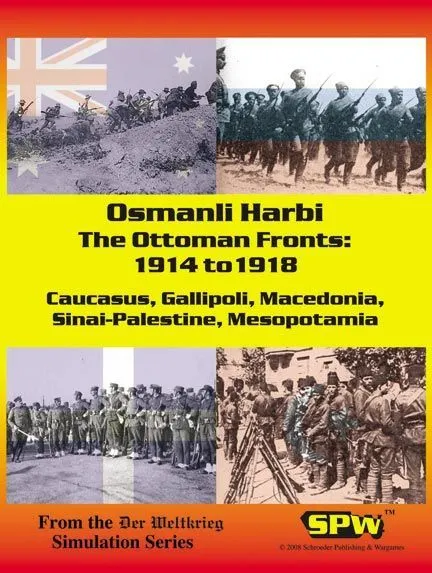
Middle East Campaigns covers all three Ottoman fronts (Trans-Caucasus, Mesopotamia, Palestine) plus an addition to the Serbia game extending it south to Salonika and covering the rest of the war in Greece, Serbia, and Bulgaria extending Der Weltkrieg Series to the Ottoman Empire. Four maps, three counter sheets. Five separate scenarios: Kalfas Cephesi - Caucasus: 1914-17 The Ottoman Empire joins the Central Powers in the World War. The Turks stop a premature Russian offensive and then launch a disastrous counter invasion. Thus begin three years of fighting in the desolate Trans-Caucasus mountains. Sina-Filistin Cephesi: 1915-18 The Ottomans attempt to seize the Suez Canal. The British advance across the Sinai wastes to invade Palestine. Both the desert and determined Ottoman resistance impede British efforts to seize the Holy Land and threaten Turkey from the south. Irak Cephesi - Mesopotamia: 1914-18 The British move quickly to secure the Abadan oil fields with the Indian Army. The Indian colonial government lobbies to push further into Mesopotamia, with Baghdad as the objective. The British led forces move deep inland and encounter serious difficulty. Canakkale Cephesi- Gallipoli: 1915 The plan was as brilliant as it was simple. Rapidly seize the Dardenelles and place Istanbul under the guns of the Entente fleet. This simple plan proved difficult to execute. Poor planning, difficult terrain, and dogged Turkish resistance bring the amphibious invasion to a standstill. Gallipoli becomes the birthplace of Australian and New Zealand national identities, as well as that of modern Turkey. Makadoya Cephesi - Greece: 1915-18 Serbia's imminent collapse causes the Entente to occupy the Greek port of Salonika. Combined British, French, Serbian, and finally Greek forces fight against Bulgarians and their German and Austro-Hungarian allies on this strategically important front. CONTENTS: 840 Backprinted Counters Standard and Scenario Rulebooks Four 34in x 22in Maps Scale is 20km/hex 4 days per turn Unit Sizes: Division/Brigade (from the publisher's website and user's description)
Osmanli Harbi: The Ottoman Fronts – 1914 to 1918 supports 2 players according to the catalogue. This is the publisher’s listed player count, so the game is designed for exactly that number of participants. Variants for other group sizes, if any, are described in the rulebook of your edition, so check it before setting up a different configuration.
The listed playing time for Osmanli Harbi: The Ottoman Fronts – 1914 to 1918 is 360 minutes. This is the publisher’s estimate for a full game. The actual duration depends on the group, the player count and familiarity with the rules: first sessions usually run longer, while experienced groups often finish faster. Setup and teaching time are not included in this estimate.
The catalogue lists Osmanli Harbi: The Ottoman Fronts – 1914 to 1918 for ages 12 and up. This is the publisher’s recommendation and reflects reading demands, rule complexity and small components rather than theme alone. Younger players can often join with help from an adult, so check the age guidance on your edition and consider your group’s experience with board games.
Osmanli Harbi: The Ottoman Fronts – 1914 to 1918 has a complexity rating of 3.1 out of 5 from BoardGameGeek players, which makes it a medium-weight game. The rating reflects how much rules knowledge, planning and decision-making a typical game demands. Expect a longer first teach for heavier games, and use a preparation guide before game night.
Osmanli Harbi: The Ottoman Fronts – 1914 to 1918 belongs to these categories: Wargame and World War I. Its main mechanics are Dice Rolling, Hexagon Grid, and Simulation. Categories describe the theme and setting of a game, while mechanics describe what players actually do on their turns. Each mechanic links to a catalogue hub with similar games, which helps when you want something comparable.
The credited designers of Osmanli Harbi: The Ottoman Fronts – 1914 to 1918 are: David Schroeder. These credits come from the published game data and name the people responsible for the game’s design, not its illustrators or publishers. Designer pages on MeepleRules collect other titles by the same designers, which helps when you enjoy a game and want to find similar ones.
The catalogue lists Osmanli Harbi: The Ottoman Fronts – 1914 to 1918 as a base game. It can be played on its own with the components in the box and does not require any other title. Expansions, if any exist, add new content or rules on top of it and are listed separately in the catalogue with a link back to this base game.