
- BGG rank
- BGG #12,702
- BGG rating
- 6.3
Toscana
- 2–5 players
- 45 min
- Complexity 2.9/5
- 2010
2012
Rules assistance for Shafausa
Plain-language explanations of turns, card effects and disputed situations, with official source references and saved question history.
For 2 players
What would you like to know?
Answers come from the official rulebook, with the page to check.
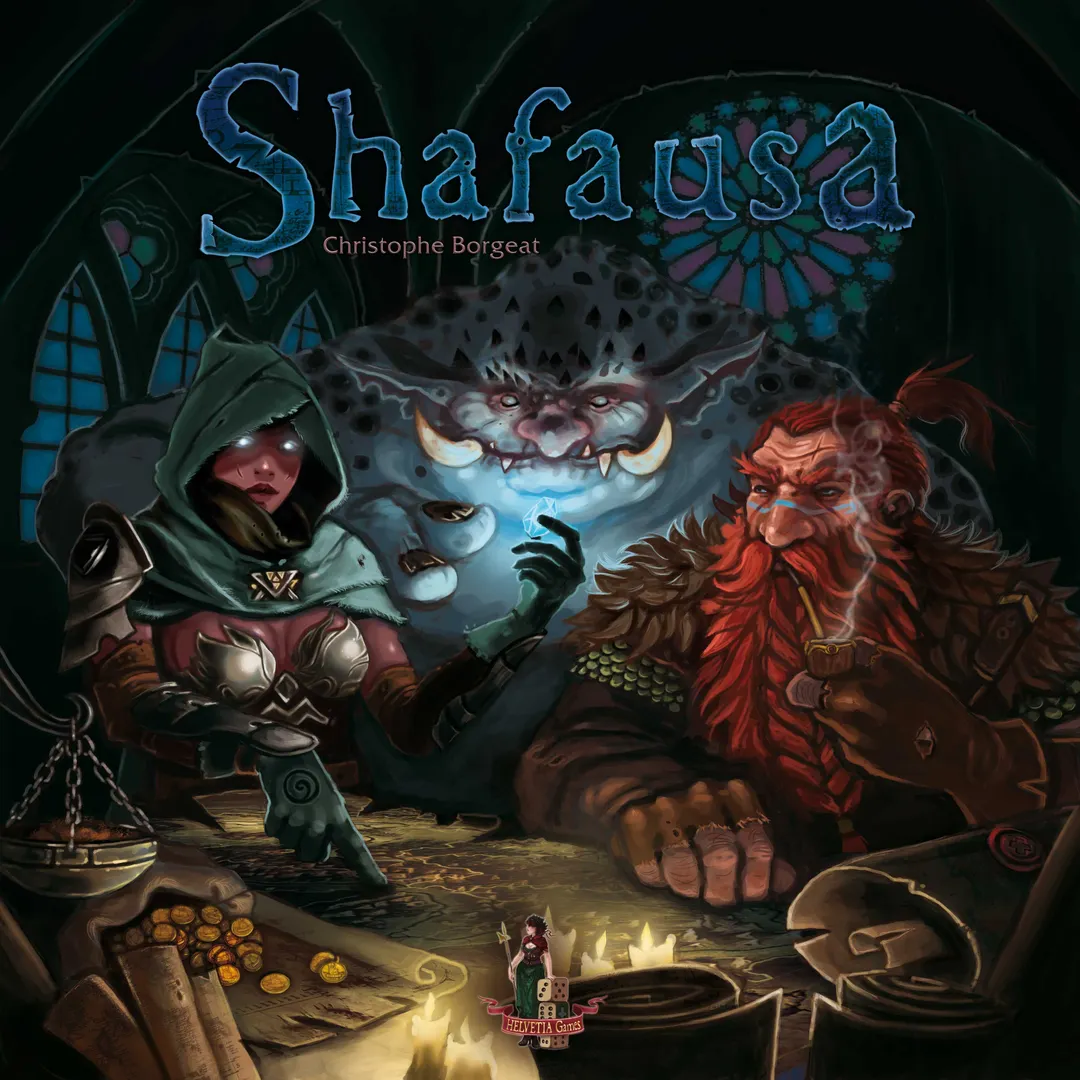
Shafausa is a board game released in 2012 for 2–6 players, 120 minutes per game, and ages 8 and up. It was designed by Christophe Borgeat and its main mechanics are Trading and Stock Holding.
While digging on the slopes of Mount Ego, the Dwarves of Shafausa discovered a secret passage under the falls of the river Rain. From there they gained access into a subterranean world of obscure galleries and gigantic caves, full of immeasurable wealth. The exploitation of this area rapidly assured the small tribe a lifestyle far superior to anything previously known in Helvetia. Their neighbours, the Vampires of Zugriga, immediately realised the fantastic commercial potential of these discoveries. Thanks to a clever stock exchange system, they implicated the other Helvetian tribes in their dealings, for the joy and well-being of all – or so they claimed. But wealth doesn't just fall from the sky, and it takes a good dose of know-how to be able to rival with the skill of a vampire... In Shafausa, each player represents a Helvetian tribe that has come to propose a new monetary system based on an exchange of resources. Each round players can make purchases (buildings, mines, warehouses) and exchange currency – and through these transactions influence the stock market for the prosperity of their region. Each player holds three Power cards with special actions, but can use only one during the game as the other two are then removed from play. The game lasts a number of rounds, with each round having seven phases: Extraction: Mines and certain buildings produce resources, with some buildings affecting how many resources something produces. Order of Play: Players bid for turn order; as players drop from the bidding, they place their marker in line relative to those who have previously dropped out, so whoever stays in the longest can get the position he wants. Buying and Constructing: In turn order, players buy at most one available building and construct two warehouses; alternatively, a player can pay to remove a building in order to make space for new buildings next round. Management: Players can build mines, add miners to their workforce, construct purchased buildings, buy and sell resources, and construct new towns. Administration: Players pay for buildings in reserve and check their resource limits; resource costs are adjusted based on past sales. Speculation: In turn order, players pay to adjust the prices of various resources, with each price marker being adjustable only once. End of Game Check: If one of a player's towns or warehouses has been filled, the game ends. Players then score points for their towns, mines, buildings, and so on, and the player with the most points wins. In addition to this "Geek" version of the rules, Shafausa includes a "Colonial" version in which players draft start-up tiles (instead of starting with pre-determined characters who come with specific buildings, funds, etc.) and a "Family" version that removes the "Speculation" phase, simplifies turn order, and otherwise makes the game less involved.
Shafausa supports 2–6 players according to the catalogue. This range comes from the publisher’s listed player count, so the game can be set up for any group size within it. Some setups, rules and scoring details may still vary by player count, so check your edition’s rulebook for the exact configuration.
The listed playing time for Shafausa is 120 minutes. This is the publisher’s estimate for a full game. The actual duration depends on the group, the player count and familiarity with the rules: first sessions usually run longer, while experienced groups often finish faster. Setup and teaching time are not included in this estimate.
The catalogue lists Shafausa for ages 8 and up. This is the publisher’s recommendation and reflects reading demands, rule complexity and small components rather than theme alone. Younger players can often join with help from an adult, so check the age guidance on your edition and consider your group’s experience with board games.
Shafausa has a complexity rating of 3.3 out of 5 from BoardGameGeek players, which makes it a medium-weight game. The rating reflects how much rules knowledge, planning and decision-making a typical game demands. Expect a longer first teach for heavier games, and use a preparation guide before game night.
Shafausa belongs to these categories: Fantasy, Economic, and Industry / Manufacturing. Its main mechanics are Trading and Stock Holding. Categories describe the theme and setting of a game, while mechanics describe what players actually do on their turns. Each mechanic links to a catalogue hub with similar games, which helps when you want something comparable.
The credited designers of Shafausa are: Christophe Borgeat. These credits come from the published game data and name the people responsible for the game’s design, not its illustrators or publishers. Designer pages on MeepleRules collect other titles by the same designers, which helps when you enjoy a game and want to find similar ones.
The catalogue lists Shafausa as a base game. It can be played on its own with the components in the box and does not require any other title. Expansions, if any exist, add new content or rules on top of it and are listed separately in the catalogue with a link back to this base game.