
- BGG rank
- BGG #1,671
- BGG rating
- 8.2
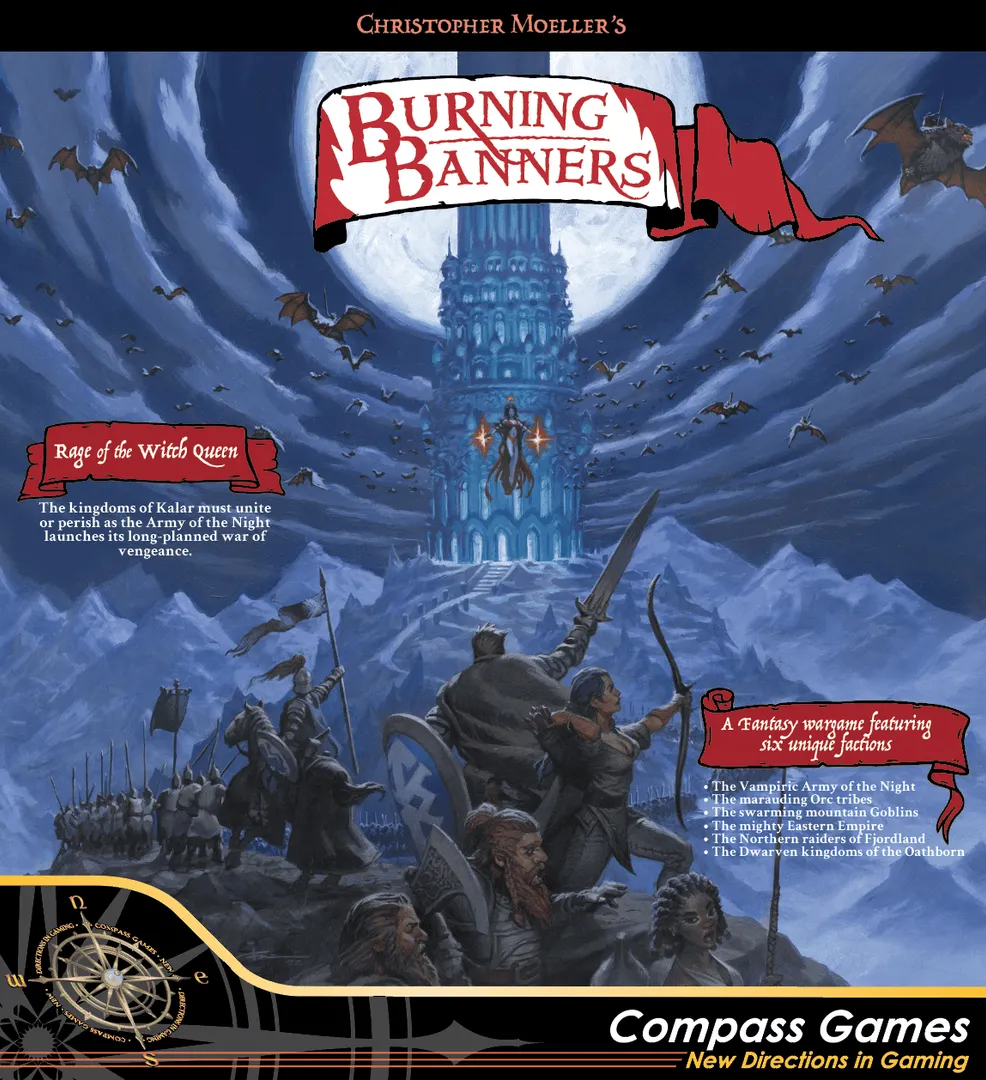
Burning Banners
- 2–6 players
- 60–180 min
- Complexity 3.2/5
- 2024
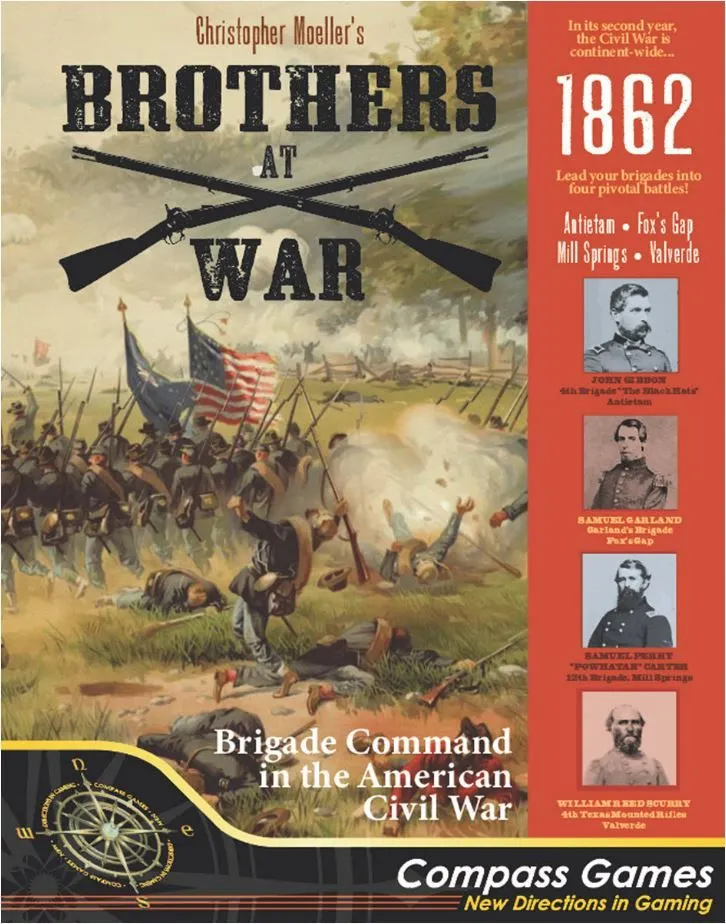
2022
Rules assistance for Brothers at War: 1862
Plain-language explanations of turns, card effects and disputed situations, with official source references and saved question history.
For 1 player
What would you like to know?
Answers come from the official rulebook, with the page to check.
Brothers at War: 1862 is a board game released in 2022 for 1–2 players and 60–240 minutes per game. It was designed by Christopher Moeller and its main mechanics are Dice Rolling, Hexagon Grid, and Campaign / Battle Card Driven.



Brothers at War: 1862 is a quick-playing, tactical wargame exploring civil war brigade command. Units are regiments, batteries and companies of skirmishers. This is a quadrigame or set of four games, each featuring a full-size, 22x34" game map and covering battles from 1862: Antietam, 5am-9am, September 17th South Mountain, 9am-6pm, September 14th Mill Springs, 7am-12pm, January 17th Bloody Valverde, 10am-5pm, February 21st Command rules are simple and abstracted. There are no combat results tables. Combat and all checks are resolved using six-sided dice, in which results of 5-6 mark success, and 1-4 failure. Brigades activate via chit pull, with their constituent units moving and fighting individually. Stacking is limited to two units per hex. Massive 1.5” hexes allow two 3/4” units to fit side by side… no information is obscured! Distinctions are made between formed and unformed infantry, deployed and limbered artillery, mounted and dismounted cavalry. Unit facing is not an element of play. Instead, unit deployment in adjacent hexes can trigger pass-through fire, which simulates flanking fire, or fire on compressed lines (both dangerous situations for civil war units). Battle Cards introduce an element of uncertainty and excitement to play. Unique off-map displays track every brigade's reserves and casualties. Once a unit's reserves are used up, it becomes exhausted and liable to break. Game Scale: Game Turn: 20 minutes Hex: 100 yards / 91 meters Units: Regiments and Batteries Game Inventory: Four 22 x 34" full color mapsheets (1.5"/38mm hex size) Four dual-side printed countersheets (520 .75"/19mm counters) One dual-side printed countersheet (228 .5"/12.7mm counters) One 24-page full color rulebook One 36-page full color scenario book Five dual-side printed brigade display player aid cards Two dual-side printed activation track display player aid cards Two dual-side printed sequence of play/terrain effects/combat chart player aid cards One deck of 52 battle playing cards Two save rolls playing cards Six off-board artillery playing cards Six 6-sided dice (3 blue/3 gray) Solitaire Playability: Medium Complexity Level: Medium-high Players: 2 or more Playing Time: 1-4 hours
Brothers at War: 1862 supports 1–2 players according to the catalogue. This range comes from the publisher’s listed player count, so the game can be set up for any group size within it. Some setups, rules and scoring details may still vary by player count, so check your edition’s rulebook for the exact configuration.
The listed playing time for Brothers at War: 1862 is 60–240 minutes. This is the publisher’s estimate for a full game. The actual duration depends on the group, the player count and familiarity with the rules: first sessions usually run longer, while experienced groups often finish faster. Setup and teaching time are not included in this estimate.
Brothers at War: 1862 has a complexity rating of 2.8 out of 5 from BoardGameGeek players, which makes it a medium-light game. The rating reflects how much rules knowledge, planning and decision-making a typical game demands. Expect a longer first teach for heavier games, and use a preparation guide before game night.
Brothers at War: 1862 belongs to these categories: Wargame, Civil War, and American Civil War. Its main mechanics are Dice Rolling, Hexagon Grid, and Campaign / Battle Card Driven. Categories describe the theme and setting of a game, while mechanics describe what players actually do on their turns. Each mechanic links to a catalogue hub with similar games, which helps when you want something comparable.
The credited designers of Brothers at War: 1862 are: Christopher Moeller. These credits come from the published game data and name the people responsible for the game’s design, not its illustrators or publishers. Designer pages on MeepleRules collect other titles by the same designers, which helps when you enjoy a game and want to find similar ones.
The catalogue lists Brothers at War: 1862 as a base game. It can be played on its own with the components in the box and does not require any other title. Expansions, if any exist, add new content or rules on top of it and are listed separately in the catalogue with a link back to this base game.