
- BGG rank
- BGG #3,342
- BGG rating
- 7.8
Bolt Action
- 2–6 players
- 120 min
- Complexity 2.7/5
- 2012
2012
Rules assistance for Blood Upon The Risers: D-Day
Plain-language explanations of turns, card effects and disputed situations, with official source references and saved question history.
What would you like to know?
Answers come from the official rulebook, with the page to check.
Blood Upon The Risers: D-Day is a board game expansion released in 2012 120 minutes per game and ages 10 and up. It was designed by Darby Eckles and its main mechanics are Dice Rolling.




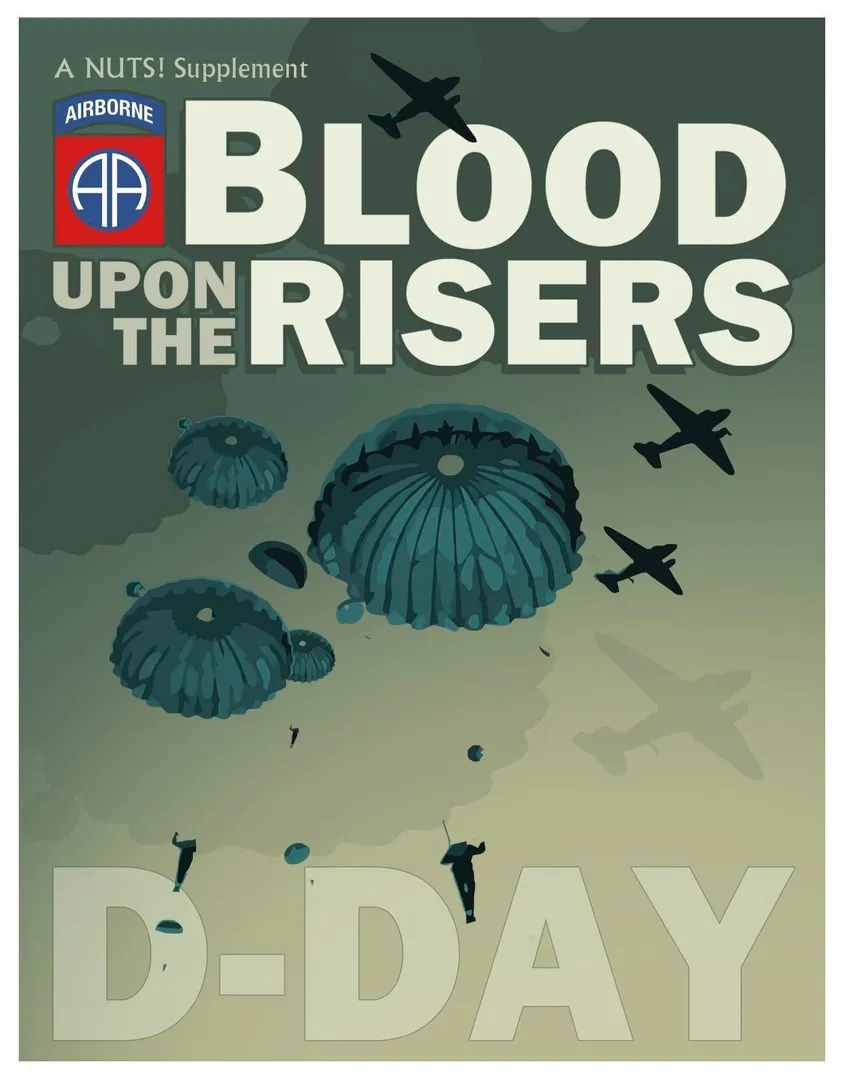
Blood Upon The Risers: D-Day is a scenario book for NUTS! 2nd Edition. It takes place on June 6, 1944 and covers the actions of small bands of American paratroopers of the 82nd Airborne Division during the early parts of Operation Neptune, a portion of the Overlord invasion plan. Inside Blood Upon The Risers: D-Day you will find: • Special Airborne rules that will make your paratroopers different than normal soldiers. • New rules for the different types of terrain you will fight in. • Tabletop artillery rules. • New weapon and vehicle stats. • Ten linked scenarios covering the actions on the 6th of June. The scenarios provided in the book are fictional, though based on actual events, and are intended to be played solo (or cooperative) from the American side. The scenarios can easily be modified to be played head-to-head with another player taking on the forces allocated to the German side. The scenarios are also designed to be played in sequence, with the result of the previous mission affecting the next. However, they may also be played as standalone scenarios with little-to-no changes.
The listed playing time for Blood Upon The Risers: D-Day is 120 minutes. This is the publisher’s estimate for a full game. The actual duration depends on the group, the player count and familiarity with the rules: first sessions usually run longer, while experienced groups often finish faster. Setup and teaching time are not included in this estimate.
The catalogue lists Blood Upon The Risers: D-Day for ages 10 and up. This is the publisher’s recommendation and reflects reading demands, rule complexity and small components rather than theme alone. Younger players can often join with help from an adult, so check the age guidance on your edition and consider your group’s experience with board games.
Blood Upon The Risers: D-Day belongs to these categories: Wargame, Miniatures, and World War II. Its main mechanics are Dice Rolling. Categories describe the theme and setting of a game, while mechanics describe what players actually do on their turns. Each mechanic links to a catalogue hub with similar games, which helps when you want something comparable.
The credited designers of Blood Upon The Risers: D-Day are: Darby Eckles. These credits come from the published game data and name the people responsible for the game’s design, not its illustrators or publishers. Designer pages on MeepleRules collect other titles by the same designers, which helps when you enjoy a game and want to find similar ones.
The catalogue lists Blood Upon The Risers: D-Day as an expansion. Expansions add new content, rules or scenarios to an existing base game and usually cannot be played on their own. Check the box or publisher description for the exact base game required, and make sure your edition of that game is compatible with this expansion.