
- BGG rank
- BGG #13,278
- BGG rating
- 7.6
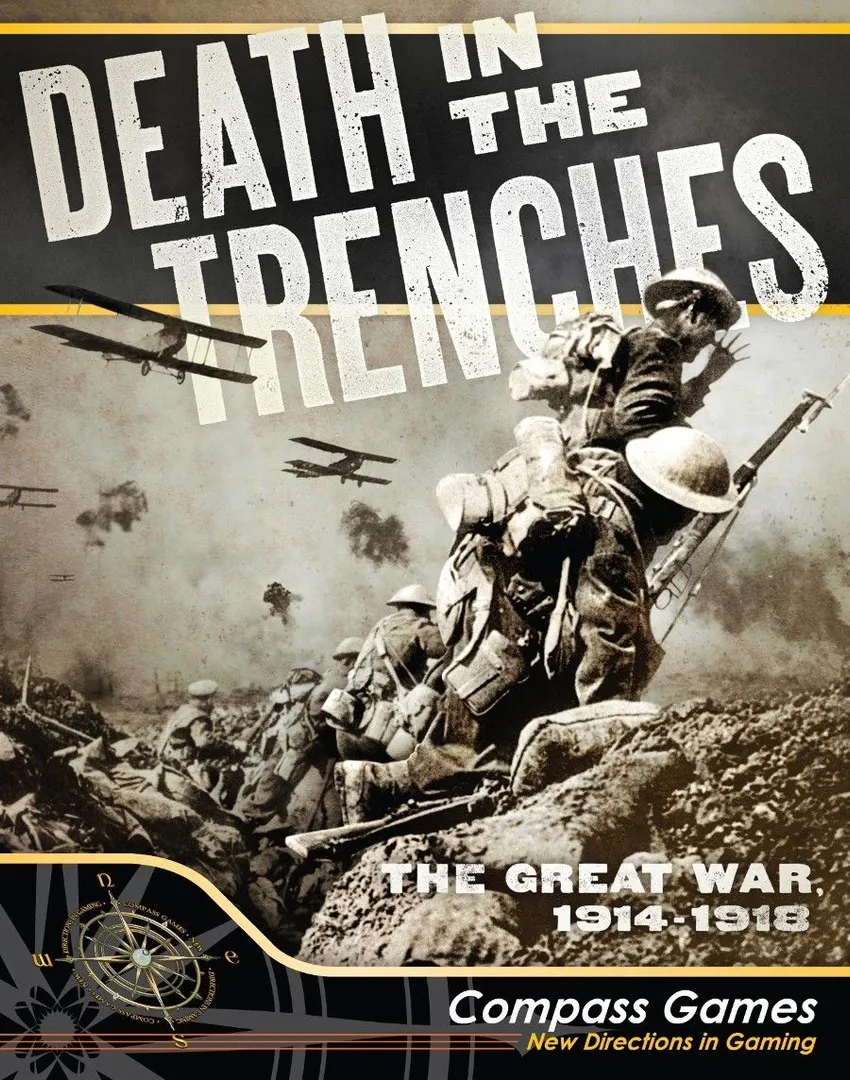
Death in the Trenches: The Great War 1914-1918 (Second Edition)
- 1–2 players
- 300 min
- Complexity 3.6/5
- 2022
2004
Rules assistance for Byzantium Reborn
Plain-language explanations of turns, card effects and disputed situations, with official source references and saved question history.
For 2 players
What would you like to know?
Answers come from the official rulebook, with the page to check.
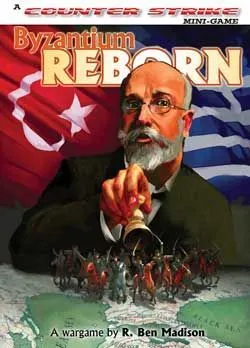
Byzantium Reborn is a board game released in 2004 for 2 players, 240 minutes per game, and ages 12 and up. It was designed by Ben Madison and Wes Erni and its main mechanics are Variable Player Powers, Area Movement, and Dice Rolling.


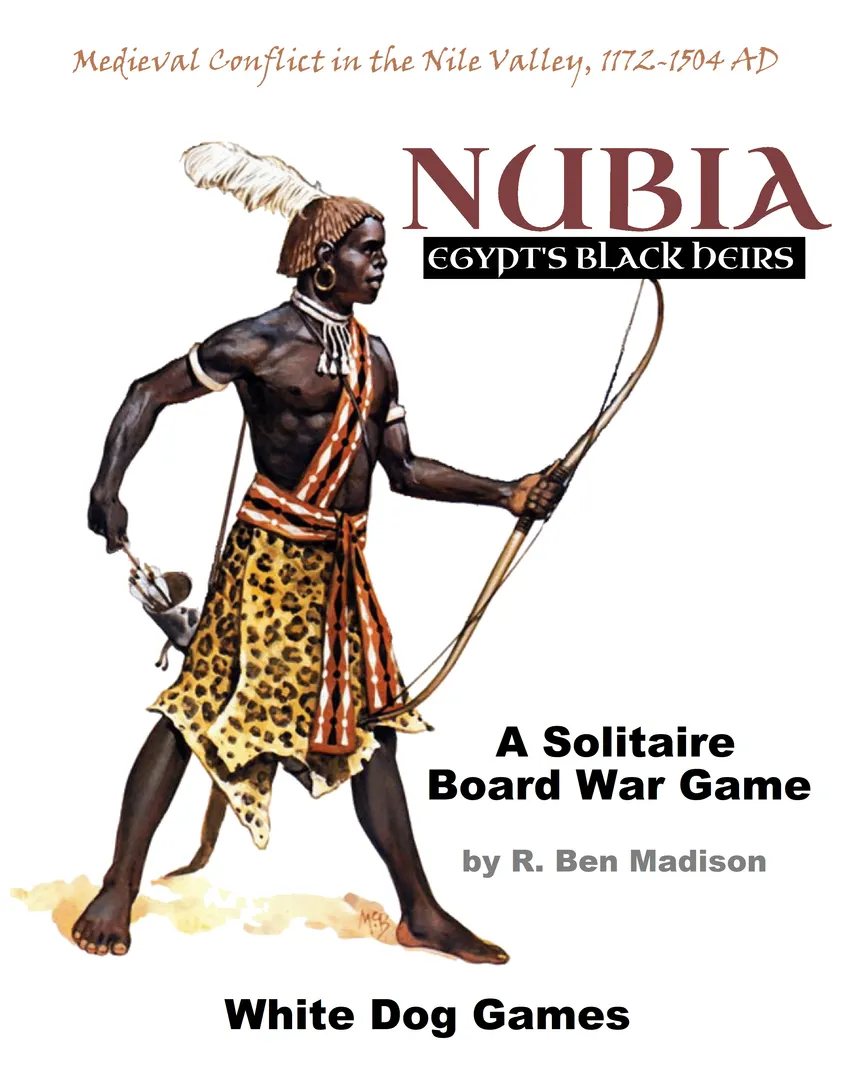


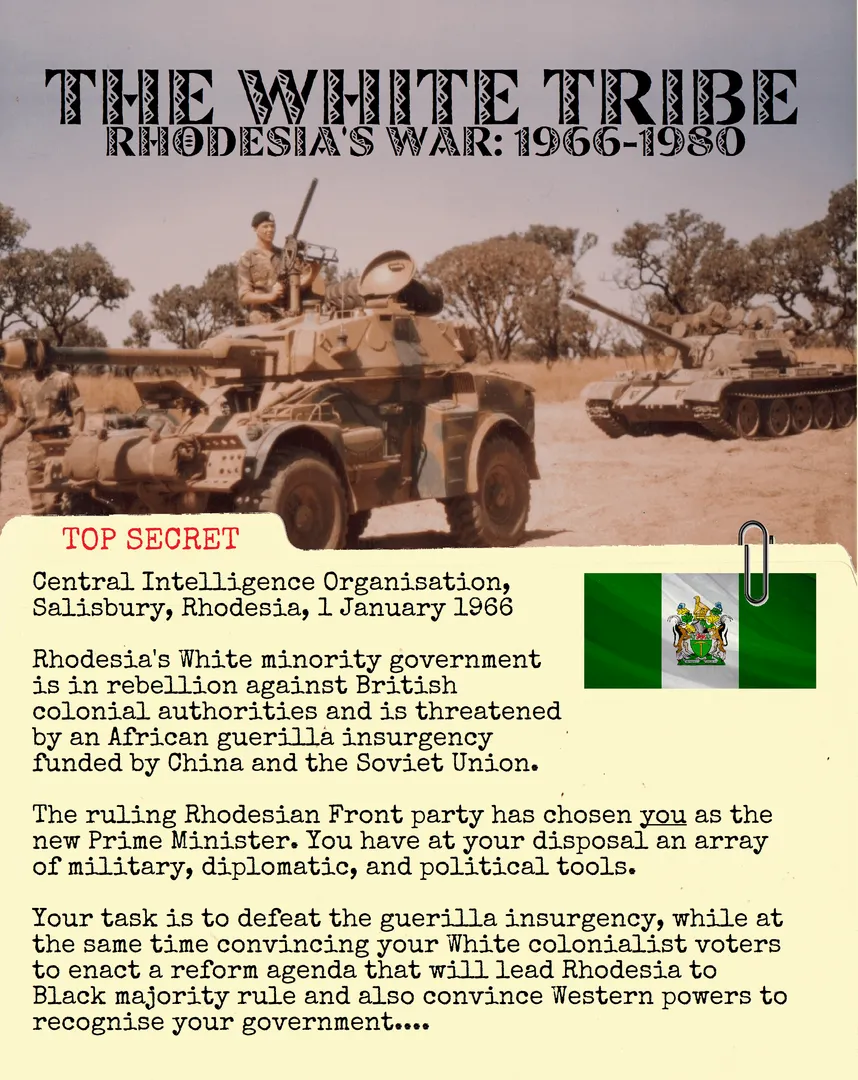


From the MicroDesign Group Website. THE GREAT IDEA World War I (1914-1918) left both Greece and Türkey near ruin. By 1920, Greece was emerging from what amounted to a civil war between supporters and opponents of the visionary but reckless prime minister, Elefthérios Venizélos. Türkey's civil war was still in progress, fought between the last, heartbroken Ottoman Sultan and the dynamic new insurgent, Mustapha Kemal (later called Atatürk). Each side in the wider struggle pursued its own vision of national rebirth. For Venizélos and Greece the dream was called "The Great Idea" and promised the renaissance of Greece as a great power through a restoration of the Byzantine Empire, the reconquest of Constantinople (lost to the Türks in 1453) and the reunion of all ethnic Greeks under the rule of Athens. For Kemal's Türks, their own "great idea" was the forging of a new, compact Türkish Republic united not by the outdated creed of Islam but by a new Türkish nationalism, modernized and empowered by Western culture and commerce. These two visions of national rebirth fought bitterly over the plains, deserts, and mountains of Anatolia for three long years. Western Anatolia was ethnically mixed, and neither side had an exclusive claim. The great prize was Smyrna, taken by Greece in 1919: a city which was home to more Greeks than Athens itself. The war had profound implications for the entire region. Greek victory would cement Greece as a regional power, and act as a beacon of hope to Orthodox Russians seeking to topple Lenin's Communists in the ongoing Russian Civil War. Türkish defeat would mean the collapse of Kemal's vision of a secular, democratic Türkey and would block the spread of Western values in the Near East, leaving Türkey battered and backward, and the rest of the Moslem world feeling victimized and enraged. As it happened, Türkey won and Greece lost. Kemal's vision prevailed; Türkey emerged victorious, united and profoundly westernized. Women gave up the veil and went to school. The Roman alphabet replaced the Arabic, and Islam was evicted from politics. For the Greeks, the end came in September of 1922 when the Türks captured Smyrna and burned the city to the ground. A million and a half Greeks fled or were expelled, and nearly 2,900 years of Hellenic civilization in Asia came to an abrupt and humiliating end. Greece, overwhelmed by refugees, collapsed into a series of coups and revolutions punctuated by all sorts of autocracy and spectacular misrule, from which, arguably, it has only recently recovered. Whose "great idea" will shape the modern Near East? Now you can make the decision by playing Byzantium Reborn! Byzantium Reborn is a simulation game on the Greek-Türkish War of 1920-22. The game is for two players, one representing the Kingdom of Greece and its allies (the Greek player), and the other the insurgent nationalist forces of Mustapha Kemal who opposed the Greek invasion (the Türkish player). The 11 x 17" map of Anatolia (Asia Minor) depicts the areas where the war took place. The scale is about 40 miles to the inch. The 280 counters represent the military formations including Turks, Greeks, French, Italians and many others.
Byzantium Reborn supports 2 players according to the catalogue. This is the publisher’s listed player count, so the game is designed for exactly that number of participants. Variants for other group sizes, if any, are described in the rulebook of your edition, so check it before setting up a different configuration.
The listed playing time for Byzantium Reborn is 240 minutes. This is the publisher’s estimate for a full game. The actual duration depends on the group, the player count and familiarity with the rules: first sessions usually run longer, while experienced groups often finish faster. Setup and teaching time are not included in this estimate.
The catalogue lists Byzantium Reborn for ages 12 and up. This is the publisher’s recommendation and reflects reading demands, rule complexity and small components rather than theme alone. Younger players can often join with help from an adult, so check the age guidance on your edition and consider your group’s experience with board games.
Byzantium Reborn has a complexity rating of 2.9 out of 5 from BoardGameGeek players, which makes it a medium-light game. The rating reflects how much rules knowledge, planning and decision-making a typical game demands. Expect a longer first teach for heavier games, and use a preparation guide before game night.
Byzantium Reborn belongs to these categories: Wargame, Political, and World War I. Its main mechanics are Variable Player Powers, Area Movement, and Dice Rolling. Categories describe the theme and setting of a game, while mechanics describe what players actually do on their turns. Each mechanic links to a catalogue hub with similar games, which helps when you want something comparable.
The credited designers of Byzantium Reborn are: Ben Madison and Wes Erni. These credits come from the published game data and name the people responsible for the game’s design, not its illustrators or publishers. Designer pages on MeepleRules collect other titles by the same designers, which helps when you enjoy a game and want to find similar ones.
The catalogue lists Byzantium Reborn as a base game. It can be played on its own with the components in the box and does not require any other title. Expansions, if any exist, add new content or rules on top of it and are listed separately in the catalogue with a link back to this base game.