
- BGG rank
- BGG #15,008
- BGG rating
- 7.6
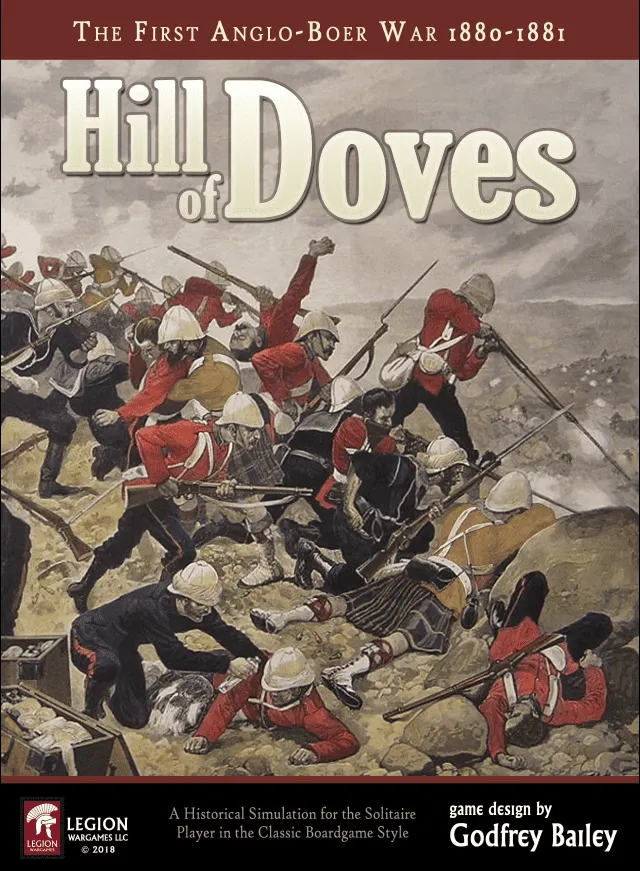
Hill of Doves: The First Anglo-Boer War
- 1 player
- 180 min
- Complexity 3.2/5
- 2013
2016
Rules assistance for Redvers' Reverse: The Battle of Colenso, 1899
Plain-language explanations of turns, card effects and disputed situations, with official source references and saved question history.
For 1 player
What would you like to know?
Answers come from the official rulebook, with the page to check.
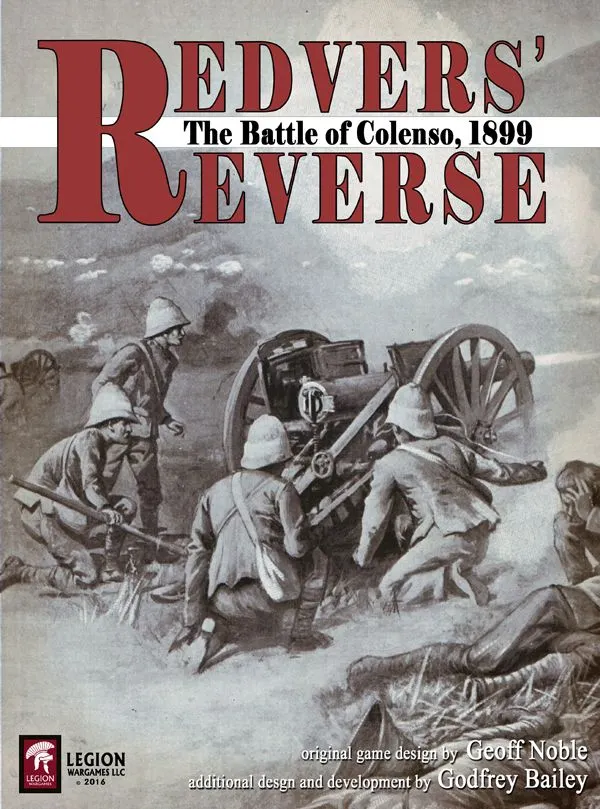
Redvers' Reverse: The Battle of Colenso, 1899 is a board game released in 2016 for 1 player, 60–240 minutes per game, and ages 12 and up. It was designed by Geoff Noble and Godfrey Bailey and its main mechanics are Area Movement, Dice Rolling, and Area Majority / Influence.





Geoff Noble - Designer On the 15th December 1899 General Sir Redvers Buller tried to cross the Thukela River in order to relieve the Siege of Ladysmith. He was faced by well entrenched Boer commandos who inflicted a reverse upon the British that ultimately led to Buller being relieved of command. Redvers Reverse is a solitaire area movement game that recreated the difficulties for the British in trying to affect a successful crossing of the Thukela against the Boer commandos (who are played by the game system). The game is at Battalion and Battery level with emphasis upon the leadership of the British at a Brigade level for Infantry and at Divisional level for the Cavalry. The key feature of the game is to present the player with the problems and difficulties that Buller himself faced. The player is provided with the same level of information and ability to influence events. Units are activated by orders sent from HQ to the various commanders, with the caveat that the receiving commander may not react as required. Orders remain in place until a rout or a commander initiative role. The nature of orders are to occupy a designated area. Combat is resolved rolling a 10 sided dice with a minimum number to hit. The impact on the two sides, from hits received, differs considerably due to the asymmetrical situation, both historically and in game terms. In addition there are numerous die modifiers for Dug in (mostly Boer), Terrain of area, Density of units in the area, Flank fire etc etc. Boer fire is usually determined by each Gruppe firing at the closest occupied area but there are certain designated exceptions. Besides combat loses units can become Disrupted, Suppressed or Rout. Leaders can Stand Firm or Panic. Both Units and Leader can recover from these postures during the Recovery Phase. For the British it is a race against time, the longer he delays the higher the Boer confidence goes, this is measured by a ‘Confidence track’ which rises and falls according to events on the Battlefield. As the level of Boer confidence, alongside the extent of the Boer loses, is central to determining if the Boer retire and thus the British win, it must be kept low at all costs. This simple rule prevents the British concentrating against the Hlangwane and turning the Boer flank, he just hasn’t got the time to redeploy his forces. There will also be a simple rule to handle Hart’s confusion when trying to find a fordable crossing of the Thukela. The Boer Gruppe are in their historical positions but their exact Firepower can change slightly from turn to turn. The British player does not know the exact firepower of each Gruppe until they are engaged. As loses are inflicted upon the Boer’s their firepower will slowly decline and the likelihood of them withdrawing slowly increase. Whether or not they withdraw is determined at the end of each game turn by revealing the full firepower available, the position on the ‘Confidence track’ and a die role. The British can win but it won’t be easy, the system will win most of the time. The intention is for the player to feel that if I give it one more go I can do it. Game scale: Map: 22" x 34" area map with a scale of 3" to a mile. Units: Company/Battalion/Battery with individual leaders. Turn: 30 minutes each.
Redvers' Reverse: The Battle of Colenso, 1899 supports 1 player according to the catalogue. This is the publisher’s listed player count, so the game is designed for exactly that number of participants. Variants for other group sizes, if any, are described in the rulebook of your edition, so check it before setting up a different configuration.
The listed playing time for Redvers' Reverse: The Battle of Colenso, 1899 is 60–240 minutes. This is the publisher’s estimate for a full game. The actual duration depends on the group, the player count and familiarity with the rules: first sessions usually run longer, while experienced groups often finish faster. Setup and teaching time are not included in this estimate.
The catalogue lists Redvers' Reverse: The Battle of Colenso, 1899 for ages 12 and up. This is the publisher’s recommendation and reflects reading demands, rule complexity and small components rather than theme alone. Younger players can often join with help from an adult, so check the age guidance on your edition and consider your group’s experience with board games.
Redvers' Reverse: The Battle of Colenso, 1899 has a complexity rating of 3.1 out of 5 from BoardGameGeek players, which makes it a medium-weight game. The rating reflects how much rules knowledge, planning and decision-making a typical game demands. Expect a longer first teach for heavier games, and use a preparation guide before game night.
Redvers' Reverse: The Battle of Colenso, 1899 belongs to these categories: Wargame and Post-Napoleonic. Its main mechanics are Area Movement, Dice Rolling, and Area Majority / Influence. Categories describe the theme and setting of a game, while mechanics describe what players actually do on their turns. Each mechanic links to a catalogue hub with similar games, which helps when you want something comparable.
The credited designers of Redvers' Reverse: The Battle of Colenso, 1899 are: Geoff Noble and Godfrey Bailey. These credits come from the published game data and name the people responsible for the game’s design, not its illustrators or publishers. Designer pages on MeepleRules collect other titles by the same designers, which helps when you enjoy a game and want to find similar ones.
The catalogue lists Redvers' Reverse: The Battle of Colenso, 1899 as a base game. It can be played on its own with the components in the box and does not require any other title. Expansions, if any exist, add new content or rules on top of it and are listed separately in the catalogue with a link back to this base game.